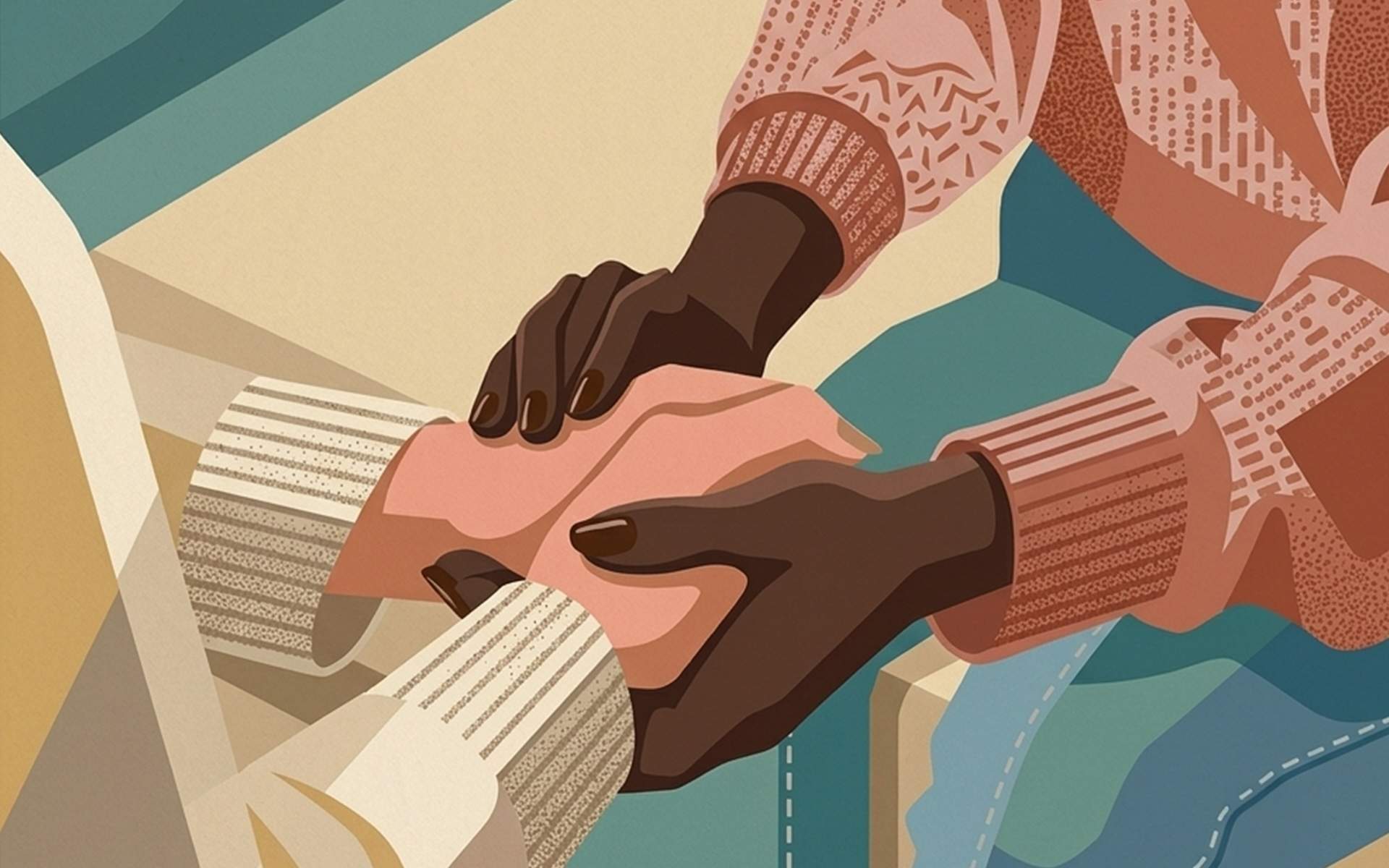
A woman sits in a therapist’s office in a Western city. She fled her country after surviving months of detention, interrogation, and torture at the hands of a government that wanted to silence her. She made it out. She is, by every external measure, safe now.
The therapist is kind. Educated. Well-meaning. They ask her to rate her anxiety on a scale of one to ten. They suggest breathing exercises. They offer a worksheet on cognitive distortions.
She never comes back.
Each time, I feel the same quiet grief—not for the therapist’s failure of compassion, but for the field’s failure of imagination.
I have heard this story, in different forms, with different detail, more times than I can count. And each time, I feel the same quiet grief—not for the therapist’s failure of compassion, but for the field’s failure of imagination.
Traditional Western therapy was not designed for her. And until we are honest about that, we will keep losing people who have already survived the unsurvivable, not to their trauma, but to our inadequacy.
Examining Our Assumptions About Safety & Healing
Western psychotherapy and mental health care rests on a set of foundational assumptions so embedded in the model that most practitioners never think to question them.
Western psychotherapy rests on a set of foundational assumptions so embedded in the model that most practitioners never think to question them.
It assumes that healing is an internal process, something that happens inside one person, in a private room, between two people who meet weekly for fifty minutes. It assumes language is the primary vehicle for processing trauma. There is an understanding that emotions can and should be named, examined, and reframed. In this framework, safety is a feeling, one that can be cultivated through technique.
For survivors of torture and state violence, almost every one of these assumptions fails.
When a person has been systematically targeted by a government, imprisoned, interrogated, beaten, humiliated, sexually assaulted, subjected to mock execution, and stripped of their humanity, the wound is not primarily psychological in the Western sense. It reaches deeper than that.
The perpetrator was not an individual. It was a system, one that in many cases is still in power, still persecuting those left behind, still present in the world that survivors now have to live in and explain themselves within.
When Betrayal Revisits In a Place That Was Supposed to Be Safe
For most survivors of state violence, the deepest wound is the destruction of trust—in institutions, in strangers, and in the world’s basic safety. That wound begins in their home countries, where the very governments meant to protect them become the source of persecution, imprisonment, torture, and terror. But for some survivors, the trauma does not end when they escape.
I have worked with individuals who survived the Islamic Republic of Iran, the Taliban, and other repressive regimes, believing that if they could just reach the United States, they would finally be safe. They believed they had made it to a country built on democracy, due process, and human rights—a place where the rules would finally be different.
Instead, some found themselves behind another locked door.
For survivors who have already endured torture, the greatest injury is often not simply being harmed again—it is realizing that the place they believed would protect them became another source of fear.
Survivors have described being held in detention under conditions they experienced as profoundly traumatizing. Several reported physical abuse, psychological abuse, prolonged isolation, humiliation, threats, and treatment that echoed the very tactics they had fled.
What made this experience uniquely devastating was not only the suffering itself, but the betrayal. They expected cruelty from authoritarian regimes. They never expected to experience abuse in the country they believed represented freedom, justice, and the rule of law.
Many have asked me, “If this can happen here, then where is safe?”
For survivors who have already endured torture, the greatest injury is often not simply being harmed again—it is realizing that the place they believed would protect them became another source of fear. That second betrayal can fracture whatever fragile trust remained, leaving them feeling that nowhere in the world is truly safe.
Offering An Anchor in Mental Health Care that Holds
When someone survives torture by a government, they don’t just feel anxious or depressed. They lose their fundamental sense that the world is safe, that they matter, that life has meaning, that justice is real. They have been told, implicitly and explicitly, by their governments, their communities, and sometimes even their own minds, that their suffering did not matter. It shatters the ground a person stands on. No breathing exercise addresses that reality. No cognitive reframe touches it.
For this reason, I place greater emphasis on rebuilding trust, restoring agency, bearing witness, and creating relational safety before introducing any technique that requires sustained inward attention.
I recognize that trauma-sensitive mindfulness has been helpful for some survivors. However, in my own clinical work with survivors of torture and state violence, I generally do not use mindfulness-based interventions that ask clients to focus inward on their bodies or remain in prolonged silence.
People who have survived the unsurvivable are not waiting to be saved. They are waiting to be believed.
Here’s why: Many of the people I work with learned that paying attention to their bodies meant anticipating pain. Their bodies are not experienced as places of safety, but as places where unimaginable violence occurred. Directing attention inward can evoke flashbacks, panic, dissociation, or overwhelming physiological arousal. Likewise, prolonged silence and stillness may closely resemble solitary confinement, detention, or interrogation, making these practices feel threatening rather than regulating.
For many survivors, healing begins not with looking inward, but with discovering that another human being can remain present without causing harm.
People who have survived the unsurvivable are not waiting to be saved. They are waiting to be believed, to have someone sit with them in their reality—not to fix it, not to reframe it, not to rush them toward resilience, but to say, simply and firmly: What happened to you was real. I believe you. And there is still a future that belongs to you.
Through my work with former political prisoners and survivors of torture, I had to unlearn many of the protocols and tools I was trained in. When we ask survivors to sit still, to maintain eye contact, to articulate what they are feeling in precise language, we are often asking them to do things that their bodies experience as threat. The clinical setting itself—enclosed, formal, power-imbalanced—can unconsciously mirror the very environments in which they were harmed.
Often the very vocabulary of Western mental health care—PTSD, trauma, triggers, self-care—often does not translate. Not just linguistically, but conceptually. Many of my clients do not identify as traumatized. They identify as survivors, as resisters, as people who did what they had to do.
In Western therapy, language is everything. Talk therapy is built on the premise that speaking about suffering is healing. But for many survivors I work with—Iranians, Afghans, people from communities with no cultural tradition of discussing psychological pain with a stranger—language is already a site of violence. They were interrogated. Their words were used against them. They learned, in the most brutal way possible, that speaking carries risk. And then we ask them to come into a room and speak.
Beyond this, the very vocabulary of Western mental health care—like PTSD, trauma, triggers, self-care—often does not translate. Not just linguistically, but conceptually. Many of my clients do not identify as traumatized. They identify as survivors, as resisters, as people who did what they had to do. Pathologizing their experience, organizing it around a diagnosis, can feel like another form of erasure, another institution telling them who they are.
Perhaps the most undervalued skill in this work is simply the capacity to hear what happened and not look away.
So What Does Actually Work?
For most survivors of state violence, the deepest wound is the destruction of trust—in institutions, in strangers, in the world’s basic safety. Healing begins not in a therapy room but in the slow, careful rebuilding of community: peer support, cultural spaces, shared ritual, the experience of being among people who won’t inflict pain, and where trust can start to be rebuilt.
Every culture has its own frameworks for understanding suffering and restoration. For my Iranian clients, poetry, Hafez, Rumi, the great Persian literary tradition, carries healing power that no DSM category can touch. For my Afghan clients, community prayer, collective mourning, the presence of elder women—these are not supplementary to treatment. They are treatment. Our role as practitioners is to make room for them, not to replace them.
Sustained, unflinching witness is profoundly healing, because it is the precise opposite of what the perpetrators wanted. They wanted silence. They wanted the world to look away. When we do not, we become part of the survivor’s resistance.
Perhaps the most undervalued skill in mental health care work is simply the capacity to hear what happened and not look away. Not to analyze or reframe. Not to move too quickly toward hope. To stay in the truth of what is being shared. This act of sustained, unflinching witness is profoundly healing, because it is the precise opposite of what the perpetrators wanted. They wanted silence. They wanted the world to look away. When we do not, we become part of the survivor’s resistance.
The mental health field is not malicious. Most practitioners who fall short with this population do so because they were never taught otherwise. Our training programs, our diagnostic frameworks—they were built for a different kind of suffering, in a different kind of world.
