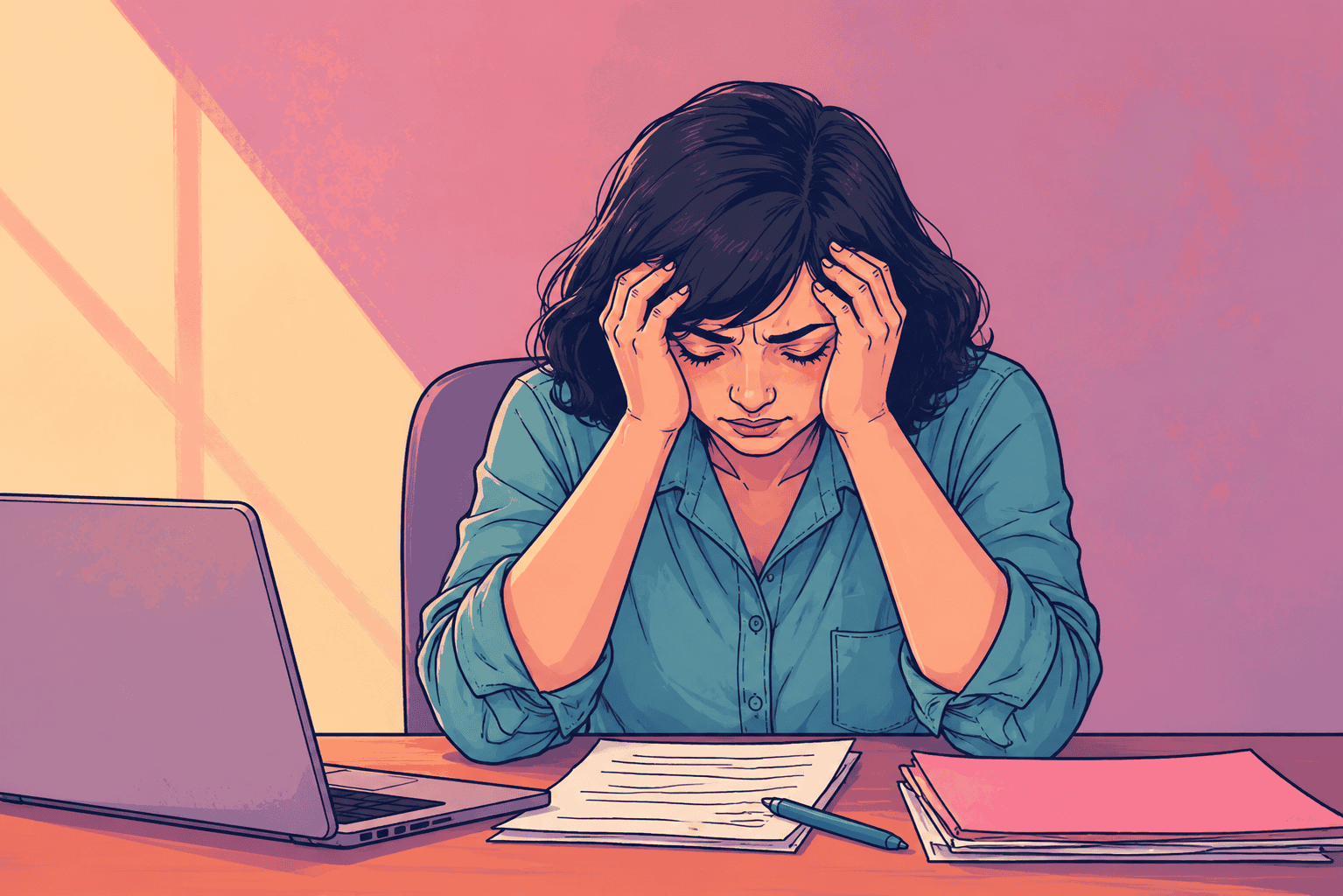

I used to think I was just bad at coping with stress.
Every Sunday evening, I felt anxious about the week ahead. My chest would tighten when certain emails appeared in my inbox. Before meetings, I’d rehearse what I wanted to say over and over, trying to avoid saying the wrong thing.
At the time, I blamed myself.
I told myself I needed to be tougher, calmer, better, more resilient. Everyone else seemed to be managing, so I assumed the problem must be me.
What I didn’t understand then was how deeply a toxic workplace can affect your sense of self.
From the outside, everything looked fine. The organization was respected. The leadership team was ‘successful’ and admired. The person at the center of most of my stress was charismatic, confident, and highly regarded by others.
That made it even harder to trust my own experience.
There was no obvious bullying. No shouting. No dramatic incidents I could point to and say, “This is why I’m struggling.” Instead, it was a slow accumulation of smaller things.
Conversations that left me feeling strangely ashamed. Criticism disguised as ‘advice.’ Moments where I’d walk away confused, wondering whether I’d misunderstood what had just happened.
Sometimes I was praised warmly. Other times I was ignored or subtly undermined. Team dynamics left me feeling paranoid and excluded. The inconsistency kept me constantly trying to prove myself.
I became more careful, more accommodating, more self-critical. I thought if I communicated perfectly and performed well enough, things would improve.
Eventually, I realized I had started losing trust in myself. I second-guessed simple decisions. I apologized constantly. I became emotionally exhausted from monitoring other people’s moods and trying to avoid conflict.
Then one day in a team meeting I remember having a moment where I realized my work environment replicated my home environment growing up. Different people of course, but the same characters. The charismatic boss being the narcissist, surrounded by ‘enablers’—all keen to minimize, justify, or excuse the toxic behavior. In that moment I saw it for what it was—narcissistic abuse in the workplace.
Looking back now, I can see how unhealthy environments often condition us to disconnect from our own instincts. We become so focused on keeping the peace, pleasing others, or avoiding criticism or even focused on our ambitions that we stop noticing what our mind and body are trying to tell us.
Mine had been trying to tell me for a long time.
The turning point came when a friend asked me, “Do you actually feel safe there?”
I remember feeling surprised by the question because I had never thought about emotional safety at work before. I assumed professionalism meant tolerating discomfort. Pushing through. Adapting.
But deep down, I knew the answer.
No, I didn’t feel safe.
Not physically, but psychologically.
I didn’t feel able to speak openly without consequences. I didn’t feel comfortable making mistakes. I didn’t feel calm, grounded, or secure in myself anymore. Everybody competed for the approval of the boss, which I can see in hindsight was used strategically.
Admitting that was painful, but it was also the beginning of something important.
For the first time, I stopped seeing my anxiety as personal failure and started recognizing it as information.
My body was responding to an environment that constantly kept me in self-doubt.
Healing didn’t happen overnight. It took time to rebuild confidence and reconnect with my own voice again. But slowly, I stopped minimizing what I had experienced.
And I stopped blaming myself for being affected by it.
I think many people are carrying workplace experiences they haven’t fully acknowledged because the harm doesn’t always look dramatic from the outside. Sometimes it simply looks like slowly becoming smaller, quieter, and more uncertain of yourself. Professional experience should increase confidence… not diminish it.
After I left, I felt almost instant relief, and a sense of my confidence and self-trust quickly returned. It renewed the sense that it wasn’t me or my fault. I was having an understandable response to being in a toxic situation, full of toxic, narcissistic dynamics.
And the experience only helped inform my understanding and ability to recognize this later on, speaking to others who feel the same at work. It’s not uncommon that we find ourselves in ‘familiar dynamics’—even at work. But what feels familiar is not necessarily healthy.
If you recognize yourself in this, I hope you know this:
You are not weak for being affected by an unhealthy environment.
We all, as humans, are deeply impacted by the spaces and relationships we spend our lives in. And sometimes the first step toward healing is simply allowing yourself to tell the truth about what those spaces or situations have done to you.
