Led to the Light
When COVID stirred doubts in my seven-year-old’s mind about God’s goodness, careful Bible study helped him grasp God’s work in suffering and our hope in Christ. And once those truths took root, a journey through Middle-earth brought them to life.
I’d left my medical practice to homeschool years before, but in 2020, I returned to help when COVID cases overwhelmed the ICUs in Boston. As fears that I would catch the virus dogged my son, he wrestled with questions about God’s kindness. “Why would God let this happen?” he’d ask. “I’m not sure God is even real.”
A careful study of Scripture guided him back to the light. Then, a journey through Middle-earth helped him cleave to his newfound hope. One afternoon before I left for a night shift, we snuggled on the couch to continue our reading of J. R. R. Tolkien’s The Return of the King. The scene depicted the siege of Minas Tirith by the evil Lord Sauron’s armies. Gloom enshrouded the fortress. Defeat seemed inevitable. And then, the riders of Rohan swept over the hills, bringing with them the promise of rescue. With their arrival, the very air changed around them: “for morning came, morning and a wind from the sea; and darkness was removed.”1 As I read, my son’s eyes misted with tears. “Can you read those beautiful words again?” he asked. I did, and we talked about how we had assurance of the morning too. Although things appeared bleak, our Savior would return. Dawn would come. And Jesus would make all things new (Rev. 21:5).

In this concise guide, author Kathryn Butler and book reviewer Korrie Johnson provide discernment, practical resources, and thoughtful notes on some of Christianity’s most cherished children’s books to foster gospel-centered engagement and conversations with kids.
“The Peculiar Quality of Joy”
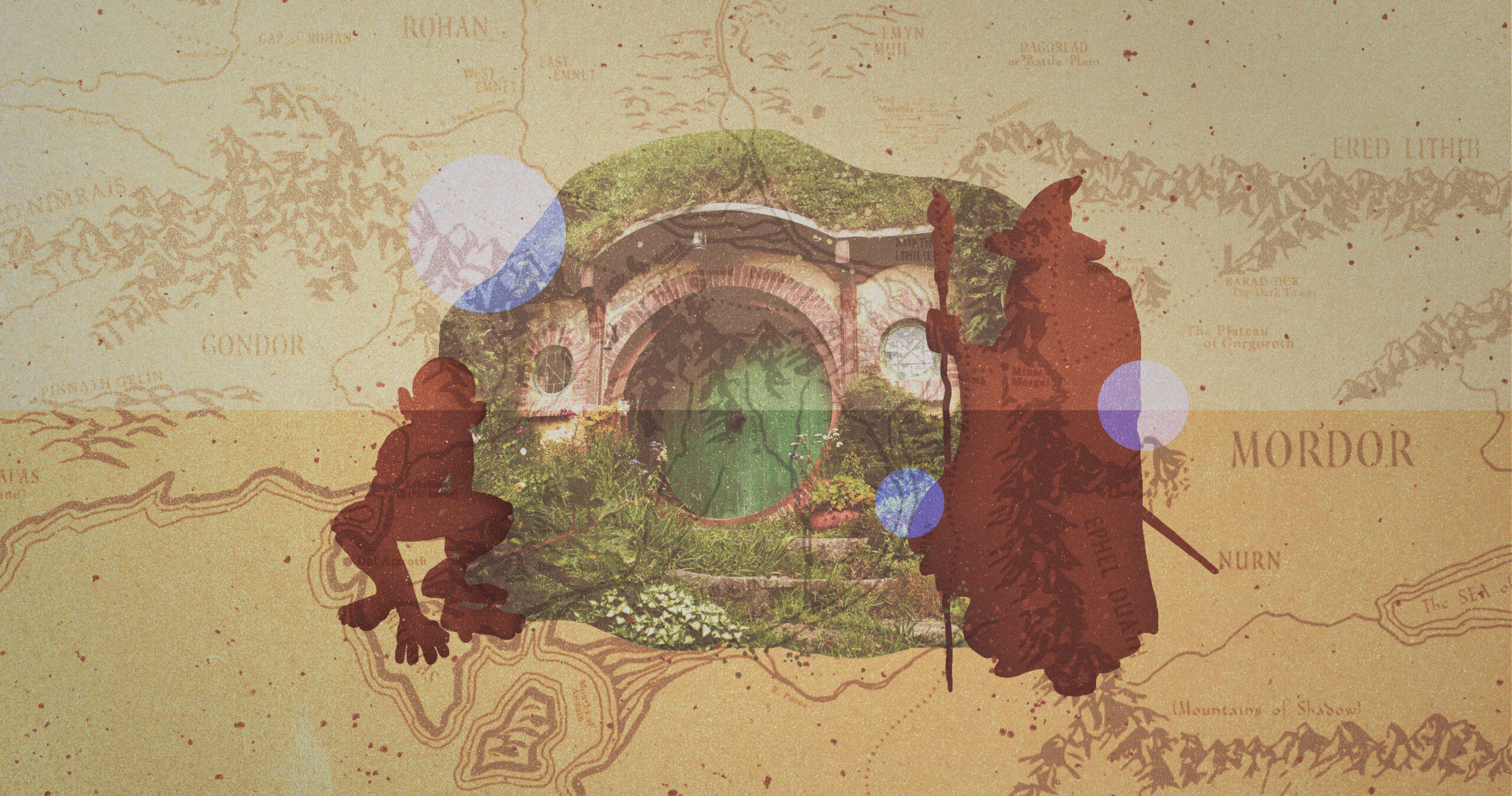
Such lovely moments abounded when reading Tolkien’s works with my kids. Although not overtly Christian in its symbolism—Middle-earth is no Narnia—throughout The Lord of the Rings we see threads of the Christian narrative: the downtrodden people battle against a colossal evil bent on destruction; a humble and lowly hero, Frodo, suffers to save Middle-earth; a beloved teacher, Gandalf, gives his life to save others and then rises again. The trilogy glitters with Christian elements, reflecting Tolkien’s belief, as he articulated in his essay On Fairy-Stories, that “the peculiar quality of ‘joy’ in successful Fantasy can be explained by a sudden glimpse of the underlying reality or truth . . . it may be a far-off gleam or echo of evangelium in the real world.”2 He elaborated further that Christ’s resurrection is the ultimate “eucatastrophe,” or happy ending, toward which all great, fanciful stories point:
The Birth of Christ is the eucatastrophe of Man’s history. The Resurrection is the eucatastrophe of the story of the Incarnation. This story begins and ends in joy. It has preeminently the ‘inner consistency of reality.’ There is no tale ever told that men would rather find was true, and none which so many skeptical men have accepted as true on its own merits.3
The “peculiar quality of joy” of which Tolkien speaks doesn’t relegate itself to scholarly musings or dusty library shelves. It isn’t the stuff of academia only. Rather, it has the potential to grace our kitchen tables and our living room sofas, to light our children’s days with sparks of wonder and, in the best circumstances, to reinforce the truths that heroes exist, good overcomes evil, and in Christ “death is swallowed up in victory” (1 Cor. 15:54).
Six Gospel Themes in The Lord of the Rings
Although some may read Tolkien’s work and miss his strokes of beauty and grace, for those alert to gospel themes, The Hobbit and The Lord of the Rings offer abundant riches. Tolkien writes of providence and sacrificial love. His characters fight against a formidable and dark power, and frequently they cannot save themselves but must rely on a savior. Several characters are shadows of Christ: a wizard returning from the grave in a glorified state; a hobbit bearing a burden to save the world; a king returning to the throne and making all things new.
The following are six themes in The Hobbit and The Lord of the Rings that enriched conversation with my kids about gospel truths. As you journey into Middle-earth, read with a keen eye for such themes and make room in your day to pause and wonder with your little ones. Tolkien offers followers of Christ ample opportunities to gasp at the stunning grace of our Lord.
Tolkien offers followers of Christ ample opportunities to gasp at the stunning grace of our Lord.
1. Providence
Providence features prominently in The Hobbit. Few expect Bilbo to accomplish great things (including Bilbo himself), yet he plays a significant role in the adventure. His recruitment by the dwarves echoes times throughout the Bible when God chose the unexpected—Moses, Abraham, and David, for example—to fulfill his purposes.
2. Reality of Sin
Gollum’s obsession with the magic ring, first introduced in The Hobbit and explored in greater depth in The Lord of the Rings, is a vivid portrayal of the power of sin to entice and corrupt. We learn that Gollum committed murder to obtain the Ring “because the gold looked so bright and beautiful,”4” language reminiscent of Genesis 3:6. Gollum desires the Ring above all else, even as it burdens him and lures him into wicked acts.5 Like sin, the Ring tempts those around it, then defiles and destroys them. As Elrond states, “The very desire of it corrupts the heart.6”
3. New Heavens and New Earth
Tolkien describes both Rivendell and Lothlórien as idyllic places where weary travelers find rest. “Merely to be there was a cure for weariness, fear, and sadness,” he writes of Rivendell.7 Of Lothlórien he writes, “No blemish or sickness or deformity could be seen in anything that grew upon the earth. On the land of Lorien, there was no stain.”8 Similarly, after the destruction of the Ring, a new age dawns, “and all was healed and made good.”9 Such descriptions point to the new heavens and the new earth (Rev. 21:1-5).
4. Repentance
At the end of Fellowship, Boromir tries to take the Ring from Frodo. Afterward, he repents and lays down his life to save the hobbits. When Boromir says, “I have failed,” Aragorn replies, “No! . . . You have conquered. Few have gained such a victory,”10 a poignant reminder that “if we confess our sins, he is faithful and just to forgive us our sins and to cleanse us from all unrighteousness” (1 John 1:9).
5. Sacrificial Love
Examples of characters risking their lives for others abound in The Lord of the Rings. Boromir dies trying to save Pippin and Merry. Aragorn, Legolas, and Gimli risk their lives to save them as well. Frodo journeys to Mordor despite the threat to himself. Samwise rushes into battle against Shelob to protect Frodo, and then into Mordor, alone, to rescue him. In one of the most spectacular scenes, the wizard Gandalf gives his life to save the fellowship. As we finished the scene, my son said, “I think he gave himself up to save the others, Mom. Kind of like Jesus did for us.”
6. Return of the King
A recurring theme in The Lord of the Rings is the return of a foretold king who will restore peace and order to Middle-earth. The clearest example of this is Aragorn, who awaits ascension to the throne of Gondor. Tolkien offers a wonderful foreshadowing of Aragorn’s rise when Frodo and Sam stand among the ruins outside Mordor, where vines have encircled the head of the fractured statue of a king. “Look! The king has got a crown again!” Frodo cries. “They cannot conquer forever!”11 While The Hobbit is a more concise and light-spirited book, the pacing of The Lord of the Rings can drag at times, trying the patience of fidgety kids. If you need to skip or paraphrase such moments to keep your little listeners’ attention, do so. But don’t stop! As the above points demonstrate, the lovely moments of gospel hope in these books are well worth pressing on.
Notes:
- J. R. R. Tolkien, The Return of the King (George Allen & Unwin, 1955; Houghton Mifflin, 1994), 820.
- J. R. R. Tolkien, On Fairy-Stories (Harper Collins, 2014), 77–78;published in 1964 by George Allen & Unwin as part of a collection of essays, Tree and Leaf. Citations refer to the HarperCollins publication.
- Tolkien, On Fairy-Stories, 78.
- J. R. R. Tolkien, The Fellowship of the Ring (George Allen & Unwin, 1954; repr. Del Ray / Penguin Random House, 2020), 58.
- J. R. R. Tolkien, The Hobbit (George Allen & Unwin, 1937; repr. Del Ray / Penguin Random House, 2020), 81.
- Tolkien, The Fellowship, 300.
- Tolkien, Fellowship, 252.
- Tolkien, Fellowship, 393.
- J. R. R. Tolkien, The Return of the King (George Allen & Unwin, 1955; repr. Del Ray / Penguin Random House, 2020), 266.
- J. R. R. Tolkien, The Two Towers (George Allen & Unwin, 1954; repr. Del Ray / Penguin Random House, 2020), 4.
- His declaration of hope recalls the truth that Christ is the true King who reigns over all the earth, and that he will return (Isa. 9:6–7; John 18:36; Rev. 19:13). J. R. R. Tolkien, The Return of the King (George Allen & Unwin, 1955; repr. Del Ray / Penguin Random House, 2020), 351.
Kathryn Butler is the author with Korrie Johnson of Stories Woven in Silver: Pointing Kids to the Gospel Through Children’s Literature.

Related Articles
How Did Jesus’s Stories Get Passed On?
Some seek to explain how the stories were passed from Jesus into the Gospels, but that question, though tending to get primacy in academic discussion, is actually secondary.
God loves beauty, and he gives it to us as a gift. He is the source of beauty, and he is beauty himself.
Podcast: Dragons, Absent Fathers, and Stories That Heal (Kathryn Butler)
Kathryn Butler talks about the power of stories to help our kids grasp and value the true story of God’s redemption and shares about how reading with her kids helped to carry her family through the pandemic.
Podcast: Unicorns, Allegory, and Stories That Give Us Hope (Kathryn Butler)
Kathryn Butler talks about writing Christian fiction and how she has crafted books that weave together biblical themes and compelling storytelling.
