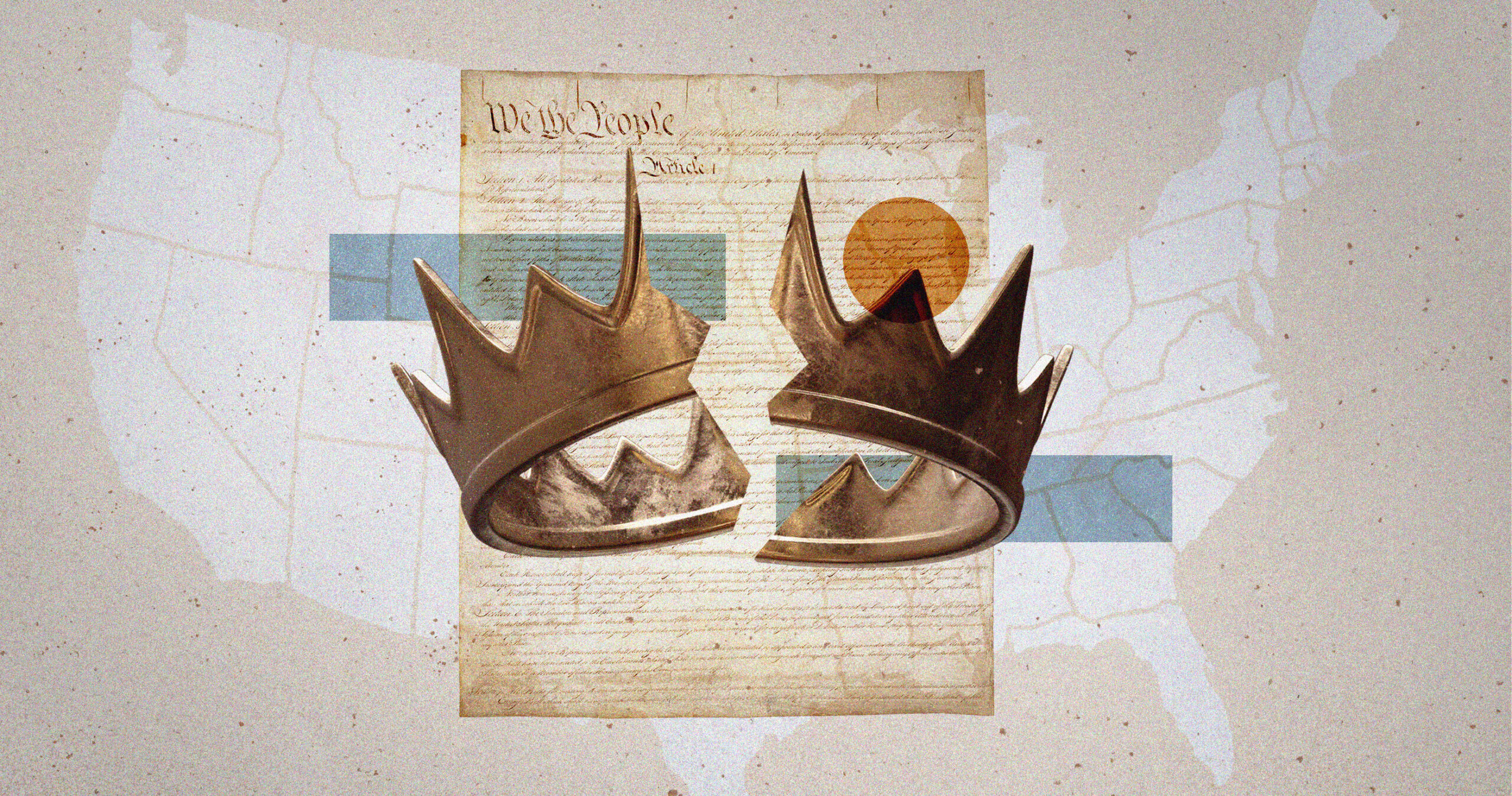
Commonplace Democracy
There are only six countries on earth that do not claim to be democratic. Four are on the Arabian peninsula: Qatar, Oman, the United Arab Emirates, and Saudi Arabia. One is Brunei, which has technically been under martial law since 1962. The other is the Vatican City.
The rest of the world’s sovereign states hold some sort of elections. Over three-quarters of them have the word “republic” in their official name, including five “people’s republics.” Some of the most authoritarian regimes anywhere call themselves “democratic republics,” including the Democratic Republic of Congo and the Democratic People’s Republic of North Korea. The fact that many of these nations would lack a number of democratic hallmarks—universal suffrage, fair elections, voter security, the rule of law, a free press, an independent judiciary, and so forth—is an ironic demonstration of how widespread the democratic ideal has become. Even those states that have no intention of functioning as democracies feel the need to pretend that they do.
This is so commonplace now that we can forget what an astonishing change it represents. Today, there are around seven billion people living in countries that purport to be democratic republics.
In 1775, there were none.1

In this skillfully researched book, Andrew Wilson explains how 7 historic events in 1776 shaped today’s post-Christian West and equips believers to share God’s truth in the current social landscape.
Any explanation of how that happened will center on the late eighteenth century, and 1776 in particular. The fountainhead of this transformation was the United States. It was the first democratic domino to fall, morphing in just fifteen years from loyal subject of the Crown into rebellious colony (1775), independent country (1776), victorious nation (1781), and constitutional democracy (1789). This, alongside its sweeping rhetoric, pioneering constitution, and peaceful transfers of power, made American democracy a source of inspiration for all subsequent independence movements.
Three years after the Declaration of Independence, it was described by a man who would play a key role in the Dutch patriot revolt as “the happiest event which could have happened to the human race in general.”2 The Russian dissident Alexander Radishchev hailed George Washington as an invincible hero leading the world toward liberty: “Freedom is your leader, Washington!”3 Soon the Venezuelan revolutionary Francisco de Miranda was an expert on the Anglo-American war, and was holding forth on “the independence of Spanish America, her immense wealth, inexhaustible resources, innumerable population, impatience under the Spanish yoke, and disposition to throw off the dominion of Spain.”4
In France, Turgot described the American people as “the hope of the world”; the Declaration of the Rights of Man and of the Citizen (1789), the most influential civil rights text of the period, was drafted by Thomas Jefferson and the Marquis de Lafayette.5 “Ireland has much the air of Americanizing,” wrote Horace Walpole during the Irish Revolution.6 The future president of Ecuador described the Declaration of Independence as the “true political Ten Commandments” of humanity.7 It was even speculated that the American example could become “contagious” in South Africa.8 American influence was everywhere. Observers witnessed a “revolution in favour of universal liberty” that “begins a new era in the history of mankind,” as the Welsh pastor Richard Price put it.9 “Next to the introduction of Christianity among mankind, the American Revolution may prove the most important step in the progressive course of human improvement.”10
We the People
So how did it happen? And why did it produce democracy (if indeed it did)?
The answer to this first question is essentially a story: of 1776, British hubris, American resilience, French intervention, and what Washington called “the smiles of Providence.”11 The second question is more difficult, though. Why did the American Revolution result in democracy?
Some would reply: it didn’t. Fewer than forty-four thousand people voted in the election of 1788/1789, out of a population of three million, which is roughly the same percentage of the country as are Mormons today. Virtually all women were barred from voting.12 So were men who did not own property. Six hundred thousand enslaved people could not vote, along with all their descendants until 1870 (in theory), and a good many of them until the 1960s (in practice). Frankly, the idea that the entire population might participate in national decision-making—male and female, slave and free—was never on the table and would have horrified most of the founders. Therefore, the argument runs, the government of late-eighteenth-century America was not a democracy at all.
Clearly, if we limit democracy to those systems of government in which every person is consulted on every decision, then the early American republic was not democratic. By that standard there are no democracies even now, and certainly not the United States. Outside of referendums, decisions are not made by the voters themselves, but by their elected representatives. All sorts of people are still excluded from choosing those representatives, including children, noncitizens, unregistered individuals, and various categories of people with mental disabilities or criminal convictions. Less than half the US population voted in the 2020 presidential election. So if we limit democracy to those systems that have direct decision-making and/or full enfranchisement, we effectively define it out of existence.
A more nuanced approach is to think about democracy as a system in which the government is based on consent, and in which supreme power rests with “the people,” however that problematically vague term is understood. By that standard, for all its faults, the early American republic clearly qualifies. The Declaration of Independence takes it as axiomatic that “governments are instituted among men, deriving their just powers from the consent of the governed,” that it is “the right of the people . . . to institute new governments,” and that “all men are created equal [and] endowed by their Creator with certain inalienable rights.” That trifecta of consent, popular sovereignty, and equality has a powerfully democratic logic to it, notwithstanding the massive inconsistencies of most of the founders (not least the man who wrote these words) when it came to slavery.13 Over the coming decades, it would percolate through American society with effects that now seem irreversible. The Constitution would state its democratic foundations even more prominently: “We the people.”
This is not to say that the founders all agreed that “democracy” was a good idea. Plenty of them did not. For John Adams, Alexander Hamilton, John Jay, and George Washington, among others, direct democracy was tantamount to mob rule and liable to disintegrate into anarchy if not held in check by other, more prudent influences—as the collapse of the French Revolution into self-immolating, murderous chaos surely proved. “The ancient democracies, in which the people themselves deliberated, never possessed one good feature of government,” declared Hamilton at the Constitutional Convention. “Real liberty is neither found in despotism or the extremes of democracy, but in moderate governments.”14 Washington agreed. “It is one of the evils of democratical governments that the people, not always seeing and frequently misled, must often feel before they can act right,” he told Lafayette. “I am not without hopes that matters will soon take a favourable turn in the federal constitution—the discerning part of the community have long since seen the necessity of giving adequate powers to Congress for national purposes; and the ignorant and designing must yield to it ’ere long.”15
Adams was even more dismissive. “Democracy never lasts long. It soon wastes, exhausts and murders itself,” he explained. “Democracy is chargeable with all the blood that has been spilled for five and twenty years.”16 What is needed instead, he argued, is a mixed government, with balance provided by competing forces. The voice of democracy is expressed by the House of Representatives, which speaks for the many. The aristocracy is represented in the Senate, which speaks for the few. And because the interests of the many and the few will always stand in tension, it is the job of the one, the President, to mediate between them, with an independent judiciary interpreting the laws that result.17 In other words, “the people” are sovereign over one branch of the government, but not all of it.
A number of the other founders saw things very differently. For Thomas Paine, Thomas Jefferson, Benjamin Franklin, and eventually James Madison, the great threat to the republic was not so much democracy as oligarchy, or even monarchy. America had nothing to fear from “the people.” The real menace was aristocracy: property qualifications for voting, the Society of the Cincinnati, Washington’s monarchic pretensions, Hamilton’s centralizing financial power grab, Adams’s ridiculous suggestion that the President should be called “His Majesty.” What was the point in escaping one form of hierarchy, only to replace it with a new one? Surely the dangers of mob rule were less than the dangers of hereditary tyranny? For Jefferson, even the bloodshed of the French Revolution was a price worth paying.
Given the strength of opinion on both sides, it is remarkable that the disagreement did not lead to the total meltdown of the young nation and its Constitution. Instead, what emerged was a creative tension that made the machinery of government far more robust than it otherwise would have been. In the end, Adams, Hamilton, and the Federalists got the institutions they wanted, with a strong central state along with the checks and balances that would prevent it from imploding into either anarchy or tyranny (as so many new republics would over the next half century). But Jefferson, Paine, and the Democratic Republicans won the battle of ideas. Everyone was created equal; the Declaration said so. Popular sovereignty rested with the people, and it covered all the branches of government and not just one of them; the Constitution said so. The forces unleashed by these statements, as well as the convictions that lay behind them, would drive a slow but relentless expansion of the franchise over the next two centuries, both within and beyond America.
This democratic conviction comes across beautifully in an exchange of letters between John Adams and his cousin Samuel in 1790. John had missed the Constitutional Convention and the crucial debates that took place there, and he still believed that although the people have “an essential share in the sovereignty” of the nation, it was as one of “a mixture of three powers forming a mutual ballance.”18 But that was not how the Constitution had been designed. It fell to Samuel to make the point:
Is not the whole sovereignty, my friend, essentially in the people? Is not government designed for the welfare, and happiness of all the people? . . . They delegate the exercise of the powers of government to particular persons, who after short intervals resign their powers to the people: and they will re-elect them, or appoint others, as they think fit.19
It is hard to state the democratic ideal better than that.
Modern democracy flourishes only in societies that share certain norms and institutions. When we consider the most obvious of those norms and institutions—universal suffrage, the rights of women, freedom of the press, freedom of religion, separation of powers, an independent judiciary, and so forth—it is striking how many of them go back to 1776.
Notes:
- There had been plenty of democracies before, of course, from classical Athens and ancient India to Central Africa and Mesoamerica. But none of them were on anything like a national scale, and none had the defining characteristics of modern democracies (competitive elections, episodic popular participation, state bureaucracies responsible for day-to-day matters, and so forth). See David Stasavage, The Decline and Rise of Democracy: A Global History from Antiquity to Today (Princeton: Princeton University Press, 2020), who calls them “early democracies.”
- Antoine Marie Cerisier, Observations Impartiales d’un Vrai Hollandois à ses Compatriotes (Arnhem: Nyhof, 1779), 15.
- Alexander Radishchev, “Ode to Liberty” (1790), later incorporated into his A Journey from St. Petersburg to Moscow, trans. Leo Wiener (Cambridge, MA: Harvard University Press, 1958). Radishchev was sentenced to death by Catherine the Great for writing it; after recanting his work and begging her forgiveness, this sentence was commuted to exile in Siberia.
- John Adams to James Lloyd, March 6, 1815, accessed online at Founders Online, National Archives, https://founders.archives.gov/documents/Adams/99-02-02-6427.
- Richard Price, Observations on the Importance of the American Revolution and the Means of Making It a Benefit to the World (London: Cadell, 1785), 123.
- Horace Walpole to Horace Mann, May 9, 1779, in Horace Walpole, The Letters of Horace Walpole, Earl of Orford, 9 vols., ed Peter Cunningham (London: Bohn, 1861), 7:198.
- Vincente Rocafuerte et al., Ideas Necesarias á Todo Pueblo Americano Independiente(Philadelphia: Huntington, 1821), 3.
- Jonathan Israel, The Expanding Blaze: How the American Revolution Ignited the World (Princeton: Princeton University Press, 2017), 221.
- Price, Observations, 1–2.
- Price, Observations, 6.
- General Orders, August 12, 1776, in Chase, The Papers of George Washington, 5:672–75 (and frequently).
- The exceptions were unmarried or divorced women in New Jersey
- “The men who wrote the Constitution sought by every evasion, and almost by subterfuge, to keep recognition of slavery out of the basic form of the new government. They founded their hopes on the prohibition of the slave trade, being sure that without continual additions from abroad, this tropical people would not long survive, and thus the problem of slavery would disappear in death. They miscalculated.” W. E. B. Du Bois, Black Reconstruction: An Essay toward a History of the Part Which Black Folk Played in the Attempt to Reconstruct Democracy in America, 1860–1880 (New York: Harcourt, 1935), 4. On Jefferson’s inconsistencies, see Thomas S. Kidd, Thomas Jefferson: A Biography of Spirit and Flesh (New Haven, CT: Yale University Press, 2022).
- Alexander Hamilton at the Constitutional Convention, June 21 and 26, 1787; see Alexander Hamilton, The Works of Alexander Hamilton, 7 vols., ed. John Hamilton (New York: Trow, 1850), 2:440; Robert Yates et al., Secret Proceedings and Debates of the Convention Assembled at Philadelphia, in the year 1787, for the Purpose of Forming the Constitution of the United States of America (Albany: Websters and Skinners, 1821), 170–71.
- Washington to the Marquis de Lafayette, May 10, 1786, accessed online at Founders Online, National Archives, https://founders.archives.gov/documents/Washington /04-04-02-0051.
- John Adams to John Taylor, December 17, 1814, accessed online at Founders Online, National Archives, https://founders.archives.gov/documents/Adams/99-02-02-6370
- John Adams, A Defence of the Constitutions of Government of the United States of America (London: Dilly and Stockdale, 1787–1788); this represents a change from his earlier Thoughts on Government (Philadelphia: Dunlap, 1776), in which it was the aristocracy’s job to mediate between the ruler and the people. See the excellent analysis of Gordon S. Wood, Revolutionary Characters: What Made the Founders Different (New York: Penguin, 2006), 175–202.
- John Adams to Samuel Adams, October 18, 1790, Founders Online, National Archives, accessed December 19, 2022, https://founders.archives.gov/documents /Adams/06-20-02-0254.
- Samuel Adams to John Adams, November 25, 1790; see Founders Online, National Archives, accessed December 19, 2022, https://founders.archives.gov/documents /Adams/06-20-02-0257; emphasis original.
This article is adapted from Remaking the World: How 1776 Created the Post-Christian West by Andrew Wilson.

